
0
TV Power Supply Board Repair vs Replacement: Which Option Makes Sense?
When a television develops a power-related problem, replacing the entire power board is not always the only solution. In some cases, the existing board may be repairable. In others, replacing the complete assembly may be more practical. The right choice depends on the type of fault, the condition of the television, availability of compatible components, and whether the existing board can be repaired reliably. Understanding TV power supply board repair vs replacement can help explain why two televisions showing similar symptoms may require very different solutions.
What Does a TV Power Supply Board Do?
A TV power supply board converts incoming electricity into the different electrical outputs required by the television. These outputs may supply the main board, audio circuitry, display electronics, backlight system, and other internal components. The exact arrangement differs between television models. Some televisions use a separate power supply board, while others combine additional functions such as LED backlight control within the same assembly. Because several systems depend on the TV power supply, a problem with the board can affect more than simply whether the television switches on.
TV Power Supply Board Repair vs Replacement
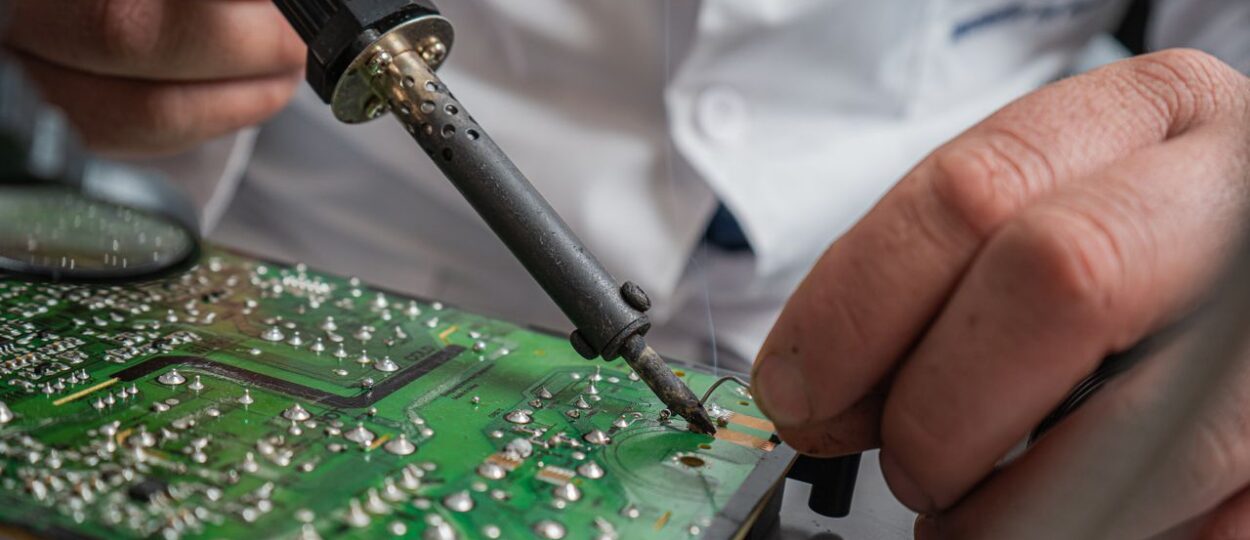
The difference between repair and replacement comes down to the nature and extent of the fault. A repair usually involves identifying a specific problem within the existing board and restoring that section while keeping the original assembly in the television. Replacement means removing the faulty board and installing another compatible TV power supply board. Neither approach is automatically better. The appropriate option depends on the condition of the original board and the television as a whole.
When TV Power Supply Board Repair May Make Sense
Repair may be considered when the fault is isolated and the rest of the board appears to be in reasonable condition. For an older television, a compatible replacement board may also be difficult to locate. In such cases, repairing the original power supply board may be worth considering if a qualified technician can identify the problem accurately. The age of the television alone does not determine whether a board can be repaired. A relatively old board may have one manageable fault, while a newer board can sometimes suffer more extensive damage. The decision should therefore be based on diagnosis rather than age alone.
When Complete Power Supply Board Replacement May Be Better
Replacement may be more practical when several areas of the board are affected, significant damage is present, or a correctly matched replacement is readily available. A complete TV power supply board replacement may also reduce uncertainty when an ageing board shows several unrelated problems rather than one clearly identified fault. This does not mean replacement should be the first response to every power-related symptom. The objective should be to identify the actual problem before deciding whether repairing or replacing the board offers the more suitable solution.
Why the Condition of the Board Matters
A technician may consider more than whether the television currently powers on. The overall condition of the TV power supply can provide useful information about whether repair is worthwhile. Previous repair work, overheating, damaged connectors, corrosion, contamination, or deterioration elsewhere on the board can influence the decision. A board with one isolated problem presents a very different repair situation from a board showing deterioration across several areas.
Why Replacement Board Availability Can Influence the Decision
Replacement availability varies considerably between television models. Manufacturers periodically change internal components as products move through different production cycles. As a television becomes older, obtaining a new replacement power supply board may become more difficult. Used or refurbished replacement boards may still exist, but availability depends on the particular model. If a compatible replacement cannot be obtained easily, repairing the original board may become more practical. If an appropriate replacement is readily available, complete board replacement may be simpler.
Samsung TV Power Supply Board Replacement Considerations
A Samsung TV power supply board should not be selected only because the television is manufactured by Samsung or because another board looks similar. Different models can use different power assemblies. Even televisions within the same product family can sometimes contain different internal hardware. When a Samsung TV power supply board replacement is required, the television model and original board information should be checked carefully. Connectors, electrical outputs, hardware revisions, and integration with other television components can vary between apparently similar boards. Accurate identification is therefore important before replacement is considered.
Vizio TV Power Supply Replacement Considerations
The same principle applies to a Vizio TV power supply. Different Vizio televisions may use different board designs depending on the model, panel, production version, and internal configuration. The first step should be determining whether the Vizio TV power supply is actually responsible for the problem. If diagnosis confirms the power board is faulty, the correct replacement should then be identified using reliable model and component information rather than appearance alone.
Why Similar Symptoms Can Require Different Repairs
Two televisions can behave similarly while having completely different underlying faults. A television that fails to start normally could potentially have a problem involving its power system, main electronics, backlight circuitry, or another internal component. Even when the TV power supply board is involved, the nature of the failure can differ. One television might have an isolated board-level issue that can be repaired, while another may have wider damage that makes replacement more practical. Symptoms therefore provide useful clues, but they should not be treated as proof that a particular component has failed.
Why Diagnosis Should Come Before Replacement
Replacing a board based purely on a symptom can lead to unnecessary expense without correcting the original problem. A television’s internal systems communicate with one another. A fault elsewhere can sometimes affect how the TV power supply behaves. For this reason, a technician should determine whether the power board is the source of the fault before replacing it. If testing confirms that complete replacement is appropriate, the correct TV power supply board should then be matched using the television’s model and original component information. This is more reliable than selecting a board solely because it appears similar.
Used, Refurbished and New Power Supply Boards
Replacement boards may be described as new, used, or refurbished. These terms do not mean the same thing. A used board has previously operated in another television. A refurbished board has generally undergone some form of inspection, repair, restoration, or testing, although the exact process can vary. A new board has not previously been used in normal service. When considering TV power supply board repair vs replacement, the condition and history of an available replacement should therefore form part of the decision. Compatibility remains important regardless of whether the board is new, used, or refurbished.
Does Television Age Affect the Repair Decision?
Television age can influence the decision, but it should not be considered in isolation. If the screen, main electronics, backlight system, and other major components remain in good condition, repairing or replacing the power supply board may still be reasonable. If the television has several unrelated problems, the overall repair may be less practical. Part availability, board condition, labour requirements, and the expected condition of the television after repair should all be considered together.
Why Professional Assessment Is Important
Television power circuits can contain hazardous electrical voltages, so internal testing should be handled by someone qualified to work with television electronics. A technician can determine whether the problem originates from the TV power supply board, whether the existing board is suitable for repair, and whether complete replacement is a better option. Professional diagnosis also reduces the risk of replacing a functioning board simply because the symptoms resemble a common power-related problem.
Is Repair Always Cheaper Than Replacement?
Not necessarily. Repairing one identifiable fault may sometimes require fewer replacement components, but diagnosis and specialised repair work can involve additional labour. Replacing a complete board may sometimes be simpler, but suitable replacement boards can vary considerably in availability and condition. The better approach depends on the individual television rather than a general assumption that repair or replacement will always cost less.
Conclusion
There is no universal answer to TV power supply board repair vs replacement. Repair may make sense when the problem is isolated and the original board remains otherwise serviceable. Replacement may be more appropriate when damage is extensive, several components are affected, or a correctly matched board is readily available. Whether dealing with a general TV power supply, a Samsung TV power supply board, or a Vizio TV power supply, diagnosis should come first. Identifying the actual fault and confirming the correct component helps determine whether repairing the existing power supply board or replacing the complete assembly is the more appropriate solution.